
Supersmith
Supersmith is a mobility technology company focused on developing innovative solutions that improve accessibility and independence. Through the Scaling Innovation Programme, the company explored how its 3Scooter could help address one of the most significant barriers in accessible transport: the exclusion of disabled people from shared micromobility schemes.
Working with disabled people, transport operators, local authorities and disability organisations, the project investigated how the 3Scooter could be deployed as part of an inclusive shared mobility scheme, creating new opportunities for people who are currently unable to use shared e-scooters and e-bikes.

The Challenge
Shared micromobility services have expanded rapidly across the UK, providing convenient and affordable transport options in towns and cities. However, many of these services remain inaccessible to disabled people.
Research has found that 90% of disabled people are currently excluded from shared micromobility schemes, largely because existing vehicles require users to stand, balance and manoeuvre in ways that are not suitable for many people with mobility impairments.
The project set out to understand whether a different approach could help overcome these barriers and provide disabled people with greater access to affordable, flexible and independent travel options.
Developing an Inclusive Alternative
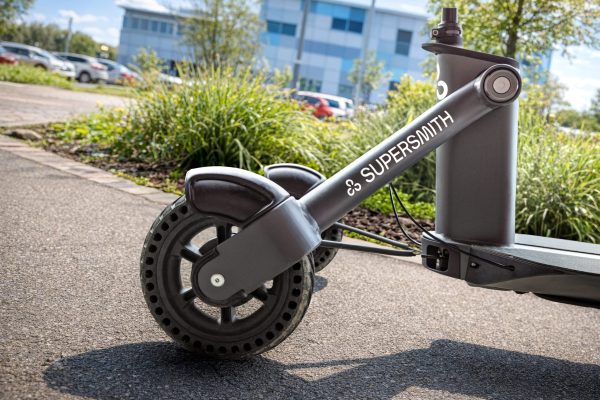
At the centre of the project is the 3Scooter, an innovative three-wheeled mobility device designed to address many of the challenges associated with both traditional mobility scooters and shared micromobility vehicles.
The vehicle incorporates stability technology that helps keep users level on uneven surfaces, reducing the risk of tipping while improving confidence and comfort. It also offers a seated riding position, adjustable features and a lightweight, foldable design that supports a wider range of journeys.
Rather than focusing solely on the vehicle itself, the project explored how the 3Scooter could operate within a shared mobility scheme, including booking systems, parking arrangements, integration with public transport and the practical requirements of operators and local authorities.
Putting Disabled People at the Centre
Meaningful involvement was a core principle throughout the project.
A steering group involving Disabled People’s Organisations, including Disability Rights UK, Transport for All, IMTAC and WECIL, helped shape the research and refine the concept at every stage. Their input informed the user journey, testing approach and recommendations for future deployment.
The project also involved in-depth testing with disabled people in London and Bristol. Participants were given the opportunity to ride the 3Scooter, explore potential use cases and provide detailed feedback on design, comfort, accessibility and how a future shared scheme should operate.
To strengthen the evidence base, the project also surveyed 273 disabled people through the CAT Panel and RiDC, providing broader insight into barriers, preferences and demand for inclusive shared mobility services.
What the Research Found
The findings demonstrated strong demand for a more accessible shared mobility option.
All disabled participants who tested the 3Scooter reported feeling safe while using it and said they would use a shared 3Scooter scheme if one became available. Participants also highlighted the potential benefits for independence, social participation and everyday travel.
The wider survey reinforced these findings, with 80% of respondents saying a shared 3Scooter scheme would be useful. Many respondents identified shopping, social activities and local journeys as key opportunities where such a service could improve access and choice.
The research also revealed an unexpected finding: the 3Scooter appealed not only to disabled people but also to a wider range of potential users. While this creates opportunities for broader adoption, it also highlights the need to ensure future schemes continue to prioritise accessibility and availability for disabled users.
Potential Impact
The project demonstrates a credible pathway towards making shared micromobility more inclusive.
By addressing key barriers around vehicle design, accessibility and confidence, the research suggests that inclusive micromobility schemes could open up new transport opportunities for up to 1.9 million disabled people across the UK.
Improved access to local travel can support greater independence, increase participation in employment and social activities, and provide a more affordable transport option for many disabled people. The project also highlights the wider benefits of inclusive design, showing how solutions developed with disabled people can create value for a much broader audience.
What Happens Next?
The research concluded that the next step should be the development of a pilot shared 3Scooter scheme to test the concept in a real-world environment. This would allow further refinement of the vehicle and operating model while generating evidence to support future investment and wider deployment.
Supersmith will continue working with disabled people, transport operators, local authorities and policymakers to explore opportunities for piloting and scaling the concept. The long-term ambition is to create a shared mobility service that gives disabled people access to the same flexibility, convenience and freedom already available to many other travellers.
Find out more about the 3Scooter model
To find out more about the 3Scoter model lease visit the Supersmith website via the link here