
The UK’s transport system is failing disabled people, with a lack of consistent accessibility across the country making travel a challenge. The Accessible Transport Policy Commission (ATPC) has called for an overhaul to ensure disabled people can travel seamlessly across all regions and modes of transport.
In Joined-Up Policies, Joined-Up Journeys: Roadmapping Accessible Transport for the UK and Devolved Governments, the ATPC highlights the urgent need for a cohesive, nation-wide strategy to tackle transport barriers that disabled people face daily. The report calls for a standardisation of accessible transport practices across England, Scotland, Wales, and Northern Ireland, along with improved coordination between policymakers at all levels.
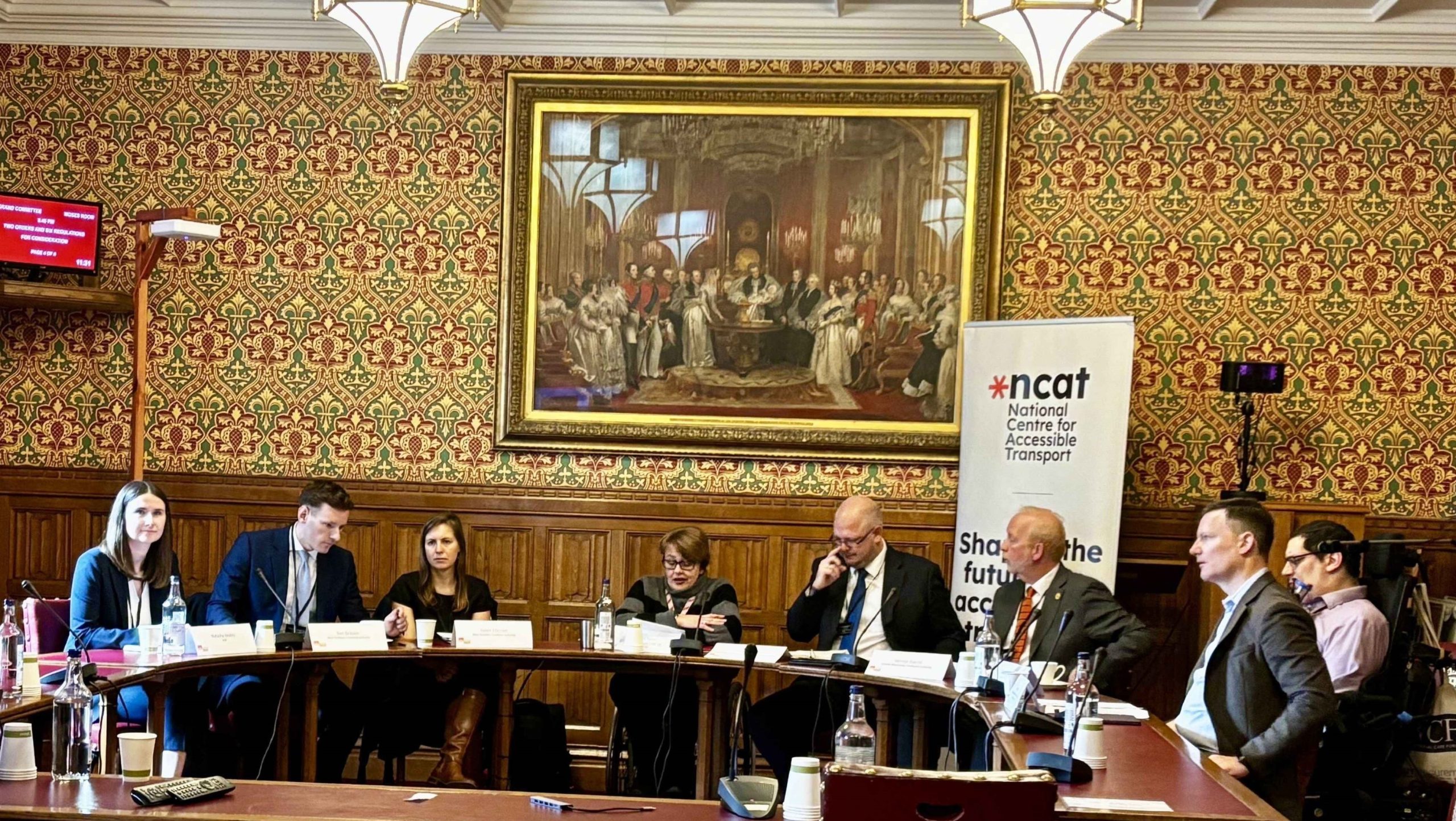
ncat – Joined up polices, joined up journeys – report introduction from Richard Baker MP captioned
In the link above Richard Baker MP chair of 9th September’s report launch event and Vice-Chair of the Accessible Transport Policy Commission discusses how its new report and proposals for five-year national roadmaps to improve transport accessibility policy and regulation can ensure “transport is a force for the inclusion of disabled people right across the UK”.
The need for reform is clear. A staggering 92% of disabled people encounter barriers when using at least one mode of transport, with many facing challenges such as inadequate physical infrastructure, outdated policies, and a lack of integrated services.
These barriers have a deep impact, particularly for disabled people from marginalised and lower socioeconomic backgrounds. Without equitable access to transport, disabled people struggle to reach employment, healthcare, education, and other critical services, stifling their ability to fully participate in society.
The ATPC’s report outlines practical, five-year roadmaps for each nation to address these issues and improve accessibility. It emphasises that better integration and collaboration between governments is vital to creating a unified transport system that works for everyone. Crucially, the Commission also stresses the importance of involving disabled people in policymaking through a process called co-production—ensuring their voices and expertise are at the heart of future reforms.
ncat – “Joined up polices, joined up journeys” – report summary introduction video captioned
The link above includes a report summary and introduction to the research.
Recommendations for each nation include:
-
- England: Develop an accessible transport framework within the forthcoming Integrated National Transport Strategy and establish a Ministerial Taskforce across departments to implement it.
- Wales: Create a National Accessibility Advisory Panel to advise Ministers and integrate the Accessible Transport Plan into the national transport strategy, Llwybr Newydd.
- Scotland: Begin co-production of an Accessible Travel Framework aligned with the National Transport Strategy 2, with a taskforce set up for delivery.
- Northern Ireland: Publish an inclusive transport strategy and establish a Ministerial Taskforce on Accessible Transport, with community accessibility panels at the district council level.
With these reforms, the ATPC hopes to put an end to the “postcode lottery” in transport accessibility, ensuring that disabled people across the UK can enjoy the same level of access to transport regardless of where they live.